
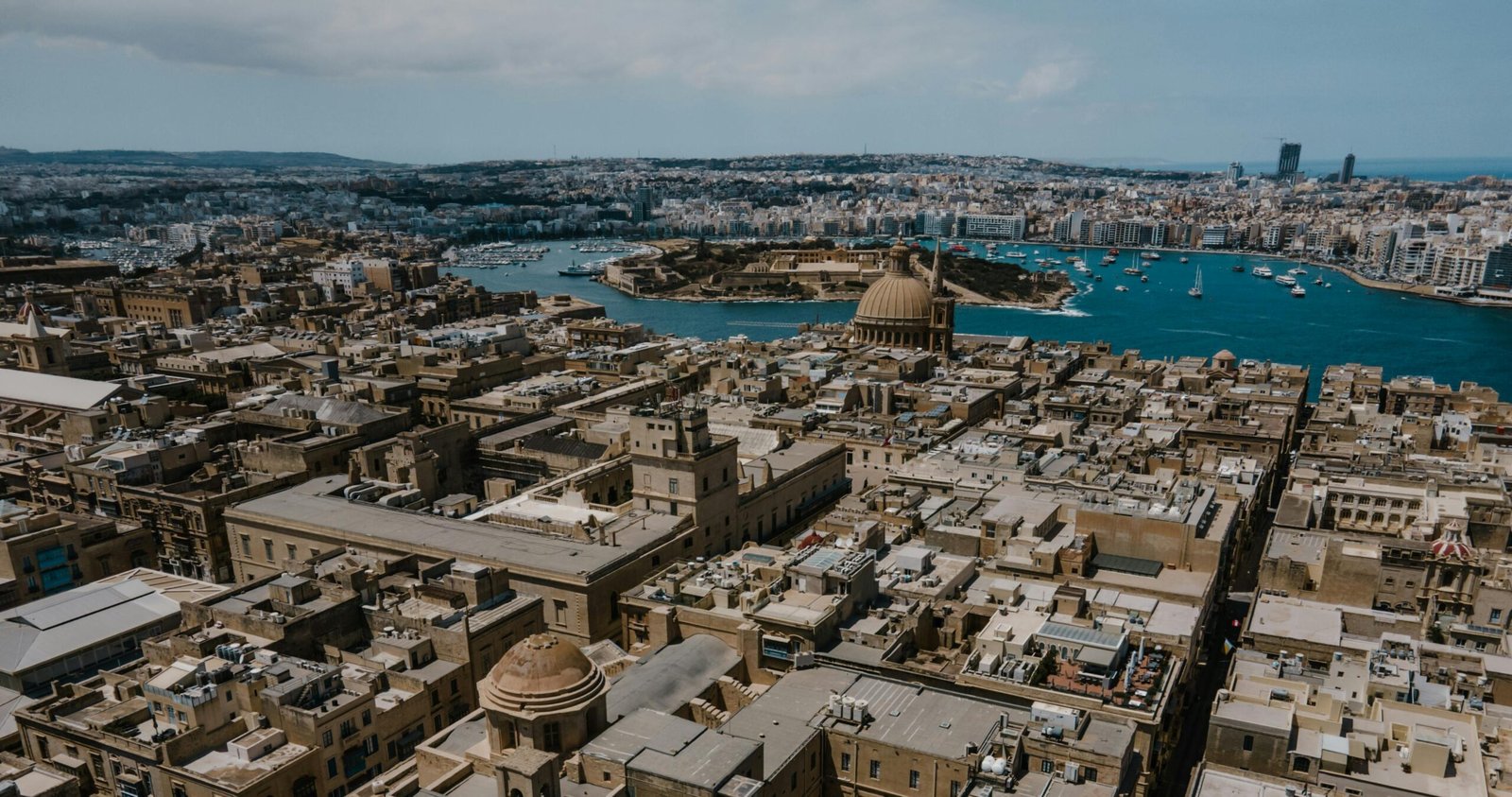
Valletta
Europe
Moderate
High
€18,000–€28,000 / year
Moderate–High
€3,000–€6,000 per m²
Progressive 0-35%
35% capital gains
Malta
Malta is one of Europe’s most attractive destinations for expats, digital nomads, and retirees. Known for its sunny climate, English‑speaking population, Mediterranean lifestyle, and strong economy, Malta offers a unique blend of island living and modern European convenience.
Key advantages include:
- English is an official language
- 300+ sunny days per year
- Strong economy in gaming, finance, and tech
- Attractive tax incentives for expats and businesses
- Safe, friendly, community‑oriented society
- Large international communities in Sliema, St. Julian’s, Valletta
Essential First Steps for New Arrivals
Register Your Address
Required for all residents with Identity Malta.
Obtain an eResidence Card
Needed for employment, healthcare, banking, and long‑term stays.
Open a Maltese Bank Account
Requires ID and proof of residence.
Residence Permit (if required)
EU citizens register after 3 months; non‑EU citizens may need work permits, Nomad Residence Permits, EU Blue Cards, student permits, or family permits.
Healthcare Registration
Register with the public health system or obtain private insurance.
Housing in Malta
Types of Housing
- Private rentals
- Furnished and unfurnished apartments
- Shared housing
- Townhouses and villas
- Seafront apartments
Market Characteristics
- High demand in Sliema, St. Julian’s, Gżira, Valletta
- Prices higher than most Southern European countries
- Deposits typically 1 month
- Most apartments furnished
Practical Advice
- Use reputable real estate agents
- Understand utility costs (AC widely used)
- Check water pressure and building age
- Consider noise levels in nightlife areas
Working in Malta
Work Permits and Visas
- Single Work Permit
- EU Blue Card
- Nomad Residence Permit
- Highly Skilled Worker Permit
- Seasonal work permit
Employment Standards
- Standard workweek: 40 hours
- Minimum 24 paid vacation days
- Overtime compensation required
- Notice periods vary
Key Industries
- iGaming and online betting
- Finance and banking
- Technology and software development
- Tourism and hospitality
- Maritime and logistics
- Creative industries
Financial Overview: Taxes and Income
Income Tax for Employees
Malta uses a progressive system with income tax and social security contributions.
Special Tax Regimes
Incentives for highly skilled workers, remote workers, investors, and retirees.
Corporate Tax
Standard rate: 35%
Effective rate often reduced through refunds.
VAT
Standard rate: 18%
Reduced rates: 7% and 5%
Healthcare System
Malta has a high‑quality public healthcare system funded through social contributions, with many residents also using private clinics.
General Practitioner
Residents choose a GP; referrals required for specialists.
Costs
- Public healthcare affordable
- Private clinics faster
- Dental care mostly private
Transportation and Mobility
Public Transport
- Buses across the island
- Ferries between Valletta, Sliema, Gozo
- Ride‑sharing services
Driving
- Driving on the left
- EU licenses valid
- Non‑EU licenses may require exchange
- Traffic heavy in urban areas
- Parking limited
Cycling
Limited but improving infrastructure.
Culture and Society
Maltese culture blends European, Arabic, and North African influences, with strong family values and a Mediterranean lifestyle.
Social Norms
- Warm, friendly interactions
- English widely spoken
- Cash and card both common
- Punctuality flexible socially
Religion in Malta
Predominantly Roman Catholic, with small Protestant, Orthodox, and Muslim communities.
Daily Life
Shopping and Services
Lidl, Welbee’s, Pavi, Greens.
Language
Official languages: Maltese and English.
Digital Services
E‑government, online banking, mobile payments.
Education and Family Life
School Options
- Public schools
- Church schools
- Private schools
- International schools
Childcare
- Nurseries
- Kindergartens
- After‑school programs
Community and Integration
Active expat communities exist in Sliema, St. Julian’s, Valletta, and Gozo.
Ready to make your move to Malta simple and stress-free?
Get the complete Malta Relocation Guide and unlock everything you need, from visas, taxes, cities, cost of living, tips, and a complete checklist.
Malta Relocation Guide