
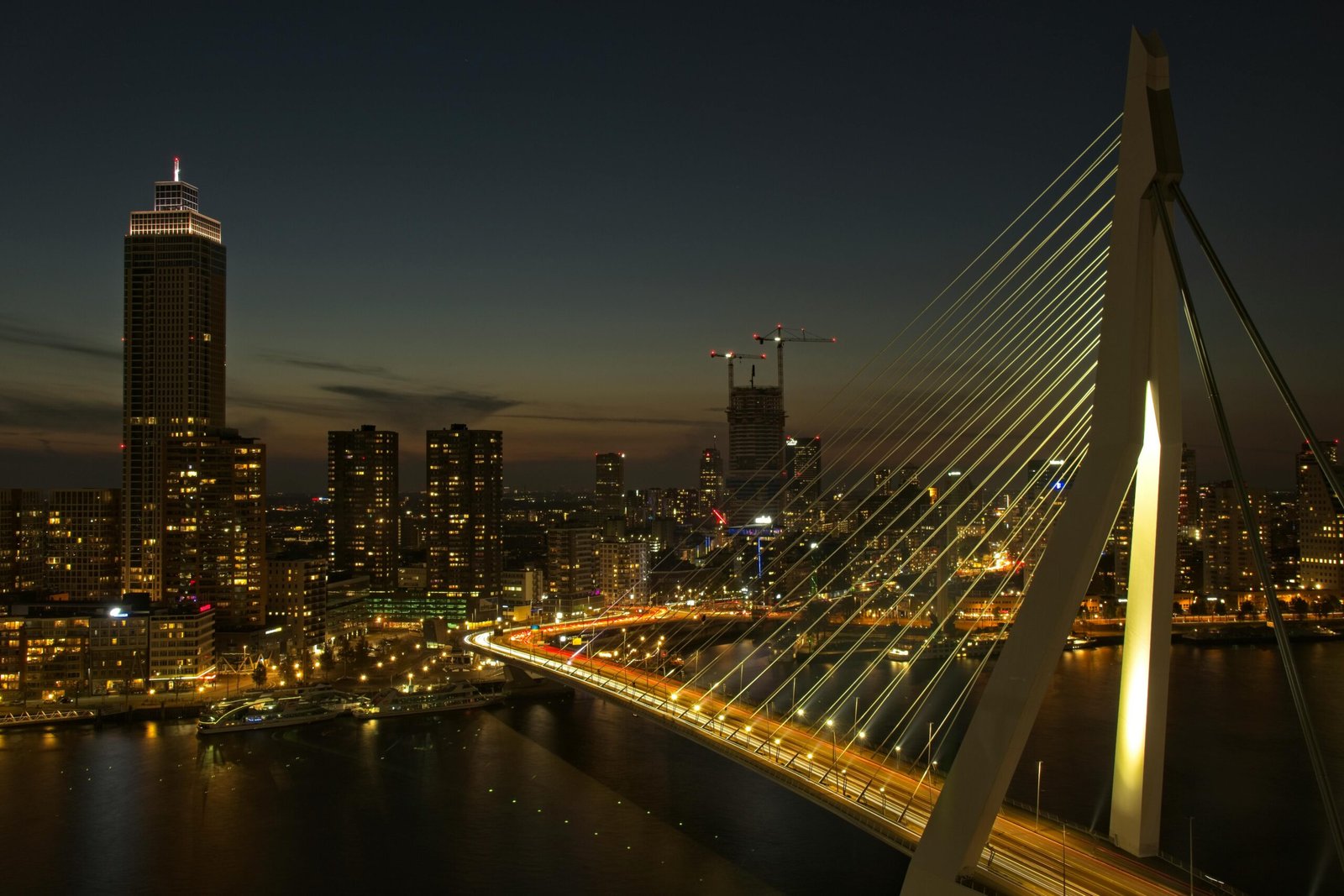
Amsterdam
Europe
Moderate
High
€35,000–€65,000 / year
High
€3,500–€7,500 per m2
Progressive 36–49.5%
36% unrealized and realized gains (from 2028)
The Netherlands
The Netherlands consistently ranks among the world’s most attractive countries for international talent. It offers a stable economy, a highly educated workforce, excellent infrastructure, and a strong emphasis on work–life balance. English is widely spoken, making integration easier for newcomers.
Key advantages include:
- High quality of life
- Strong social systems and public services
- International business environment
- Safe and well-organized cities
- Efficient public transport
- Diverse and multicultural communities
Essential First Steps for New Arrivals
- Register with the Municipality (Gemeente) – Registration provides a BSN (citizen service number), required for employment, healthcare, banking, and taxes
- Open a Dutch Bank Account – Employers typically require a local account for salary payments
- Arrange Mandatory Health Insurance – Obtain Dutch basic health insurance within 4 months of receiving a residence permit or starting work
- Secure Housing – Understand rental regulations, contract types, pricing, and energy labels
- Understand Your Employment Contract – Covers working hours, paid leave, sick leave, and termination rules
Housing in the Netherlands
- Private rentals, social housing (long waiting lists), short-stay/expat housing, student accommodations, shared housing
- High demand in the Randstad: Amsterdam, Rotterdam, The Hague, Utrecht
- Rental prices vary by region; registration fees, agency costs, service charges, and energy labels are important
- Practical advice: sign written agreements, be cautious of scams, check utilities included, understand deposit rules and inspection reports
Working in the Netherlands
- Work permits and visas: Highly Skilled Migrant permit, EU Blue Card, intra-company transfer permit, startup/self-employed visa; EU/EEA citizens do not require a permit
- Standard workweek: 36–40 hours; minimum 20 paid vacation days (often more); holiday allowance: 8% of annual salary; strong employee protection laws
Key Industries
- Technology and IT
- Engineering
- Finance and fintech
- Logistics and supply chain
- Healthcare and life sciences
- Creative and design sectors
Financial Overview: Taxes and Income
- Progressive income tax with 2 main brackets; social security contributions included; holiday allowance and pension deductions apply
- 30% Ruling – Highly skilled migrants may receive 30% of salary tax-free for up to 5 years
- Entrepreneurs: self-employed deductions, starters deductions, SME profit exemption, investment deductions; register with Chamber of Commerce (KvK), file quarterly VAT returns
- VAT (BTW): standard 21%, reduced 9% (food, medicine, books), zero rate for exports and certain international services
Healthcare System
Mandatory basic health insurance through private insurers under government regulation. Residents choose insurer and can add supplementary coverage. General Practitioner (Huisarts) is the first point of contact; specialist care requires a referral. Costs include monthly premiums, annual deductible (eigen risico), and additional services unless covered.
Transportation and Mobility
- Public transport: national rail system (NS), trams, buses, metro in major cities; pay via OV-chipkaart or OVpay
- Cycling: dominant mode of transport, safe and efficient with dedicated lanes and parking
- Driving: foreign licenses may be exchanged depending on origin; parking permits vary by municipality; roads well maintained
Culture and Society
Dutch culture emphasizes direct communication, punctuality, pragmatism, efficiency, work–life balance, consensus-based decision-making (“polder model”), personal freedom, and equality. Informality is common; privacy respected; planning preferred over spontaneity; community-oriented mindset.
Religion in the Netherlands
Largely secular with religious diversity. Approximate landscape: non-religious (majority), Christianity (Protestant/Catholic), Islam (growing), Hindu, Buddhist, and Jewish communities. Religion plays a limited role in public life but cultural traditions remain influenced by Christian holidays. Many large cities are experiencing growth in their Muslim communities.
Daily Life
Shopping: Albert Heijn, Jumbo, Lidl; shops close early except on late-night shopping days. Language: Dutch official, English widely spoken; learning Dutch helps integration. Digital services: highly digitalized (DigiD, banking, healthcare portals).
Education and Family Life
- Public schools (high-quality, free), international schools, bilingual programs, private schools
- Childcare: daycare (kinderdagverblijf), childminders (gastouders), after-school care (BSO); government allowances may apply
Community and Integration
Numerous expat groups, professional associations, and international clubs operate across the country, offering social and professional support.
Ready to make your move to the Netherlands simple and stress-free?
Get the complete Netherlands Relocation Guide and unlock everything you need, from visas, taxes, cities, cost of living, tips, and a complete checklist.
Netherlands Relocation Guide